
Tree Service in Box Elder, SD
- 24/7 Rapid Response
- Zero-Impact Crane Removals
- Fully Licensed & Insured
- Insurance Claim Assistance
HOW CAN WE HELP YOU?
Box Elder is growing fast. New subdivisions stretching east from Rapid City, families settling in near Ellsworth Air Force Base, streets lined with younger trees that still need years of proper care. And alongside all that new growth, you’ve got mature cottonwoods along Box Elder Creek, established ponderosa pines holding their ground in older neighborhoods, and green ash trees quietly fighting the alkaline soils that define this part of Pennington County. Whether your trees went in last spring or have been standing for decades, they need someone who actually understands what’s happening beneath the bark.
That’s where Canyon Falls Tree Works comes in.
Pete Adams founded Canyon Falls Tree Works in June 2023. It’s a family-owned, full-service tree care company serving Box Elder and the broader Black Hills region. In just a couple of years, the company has earned 133 five-star Google reviews, a BBB Accredited Business rating with an A+ score, and memberships in both the Association of Tree Care Professionals and the ISA Dakotas Chapter. But what separates Canyon Falls from other tree companies isn’t just the credentials. It’s the way Pete and his team approach every single job. They come in as educators first and tree workers second. They want you to understand what’s going on with your trees, not just hand over a check and watch a crew show up unannounced.
ISA Certified Arborists on staff. 133 five-star reviews. Free estimates with upfront pricing. That’s what you’re working with when you call Canyon Falls Tree Works.
Get In Touch
- (605) 898-8733
- canyonfallstreeworks@gmail.com
- Serving Box Elder, SD
The Trees of Box Elder and Why They Need Attention
Ponderosa pine is the signature tree of the Black Hills. Drive any direction out of Box Elder toward the hills and you’ll see them everywhere. Tall and orange-barked, filling ridgelines and residential yards alike. They’re beautiful trees. They’re also under constant pressure in a semi-arid climate like this one.
During drought years, ponderosa pines weaken. A stressed pine can’t produce enough resin to defend itself, and that’s exactly when pine bark beetles move in. It doesn’t look dramatic at first. You might notice small pitch tubes on the bark, those resin-soaked bumps that look a little like dried popcorn. Then the needles start turning yellow. Then red. By the time a tree looks obviously dead, the beetles have usually already moved on to the next one. That’s why catching it early makes such a difference. An ISA Certified Arborist can assess bark beetle pressure before it turns into a removal job and nothing more.
Cottonwoods are a different story entirely. They grow fast and tall along Box Elder Creek and other drainages in the area. Their size is part of what makes them impressive, but it’s also the risk. A mature cottonwood with poor branch structure or internal decay can drop serious limb weight during one of Box Elder’s summer thunderstorms. July afternoons here don’t play around. Hail, high winds, and fast-moving storm cells can turn a beautiful old cottonwood into a genuine liability in about twenty minutes flat.
Then there’s green ash. A lot of homeowners in the Black Hills region planted green ash because it’s a tough, adaptable tree. And it is. But in the alkaline soils east of Rapid City, both ash and cottonwood frequently develop iron chlorosis. That’s a condition where the tree can’t absorb enough iron to produce healthy chlorophyll. The leaves yellow between the veins, growth slows, and the tree gradually declines if nothing gets done about it. It’s not an automatic death sentence. But it takes more than just watering to fix.
Rocky Mountain juniper fills in the gaps, especially in drier spots and along rocky slopes. It’s a resilient native species, but it still benefits from proper pruning and regular monitoring as neighborhoods expand and soil compaction builds around root zones.
Box Elder’s newer subdivisions bring a different set of challenges. Trees that were planted when a neighborhood was built five or ten years ago are now reaching the size where structural pruning actually matters. Getting the branch architecture right now prevents expensive problems later. It’s far easier to correct a young tree’s structure with a few well-placed cuts than to deal with a co-dominant stem failure in a 30-year-old tree hanging over your roof.
Our Tree Services
What Canyon Falls Tree Works Does in Box Elder
Canyon Falls Tree Works offers a full range of tree services, and each one gets handled with the same level of care and real expertise.

Tree Removal
Tree removal is one of the most common requests the team gets, and it’s also one of the most technically demanding things you can do in tree care. Not all removals are the same job. A small ornamental in an open yard is pretty straightforward. A large ponderosa pine wedged between a home, a fence, and a power line is a completely different situation. Canyon Falls has crane access for exactly those scenarios. Technical removals where there’s no safe path to bring a tree down in sections without precision rigging and heavy equipment. That capability isn’t common among tree companies in this region, and it matters a great deal when the job gets complicated.
Tree Trimming and Pruning
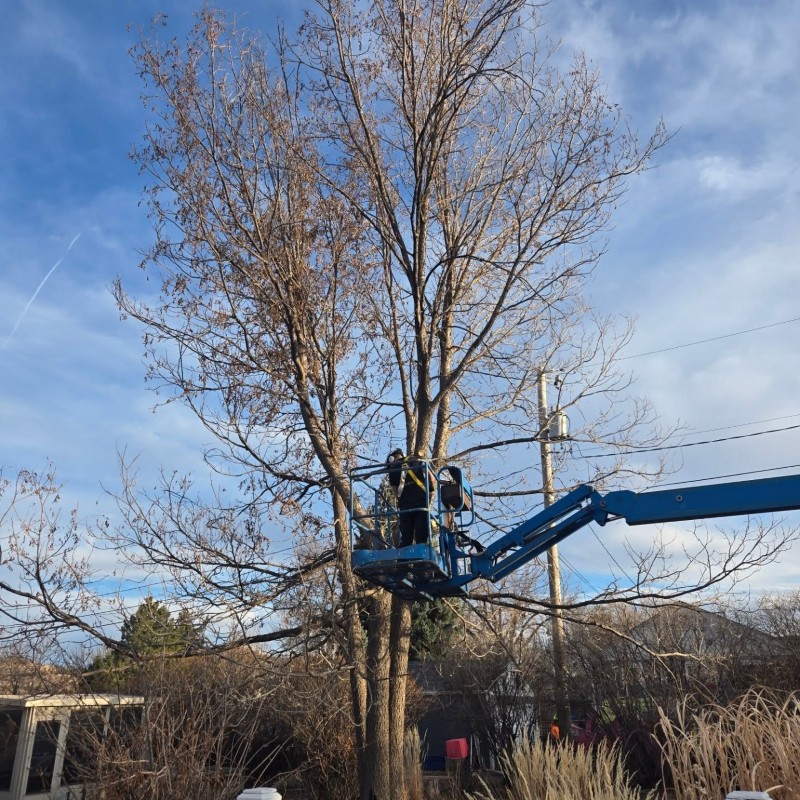
Tree trimming and pruning is about more than how a tree looks from the street. Proper pruning, done by someone who actually understands tree biology, improves structure, cuts down on storm risk, and helps the tree live a longer and healthier life. The ISA Certified Arborists at Canyon Falls follow established pruning standards because the wrong cut in the wrong place can do real damage to a tree, not just cosmetic damage.
Plant Health Care
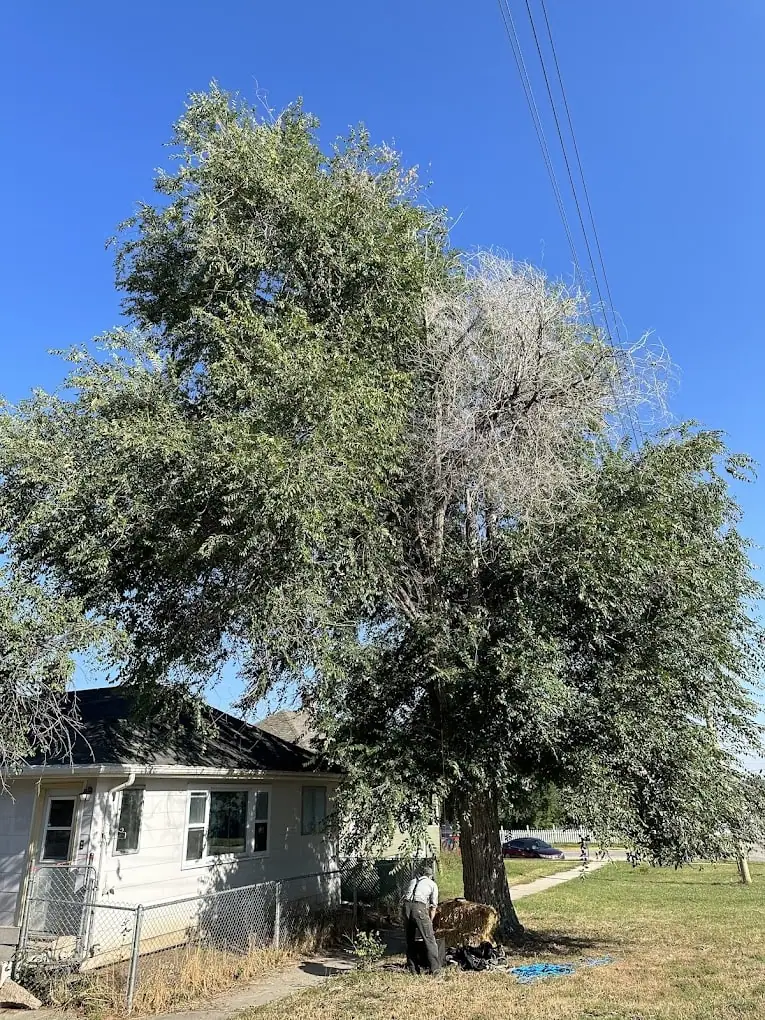
Plant Health Care, or PHC, is one of the services that genuinely puts Canyon Falls in a different category from most tree companies. The majority of tree companies either remove trees or trim them. Very few offer a systematic, science-based approach to keeping trees healthy over time. PHC can include soil treatments, fertilization, pest management, and disease monitoring. For a homeowner dealing with iron chlorosis in an ash tree or early bark beetle pressure on a ponderosa pine, PHC can be the difference between saving the tree and losing it entirely.
Root Collar Excavation
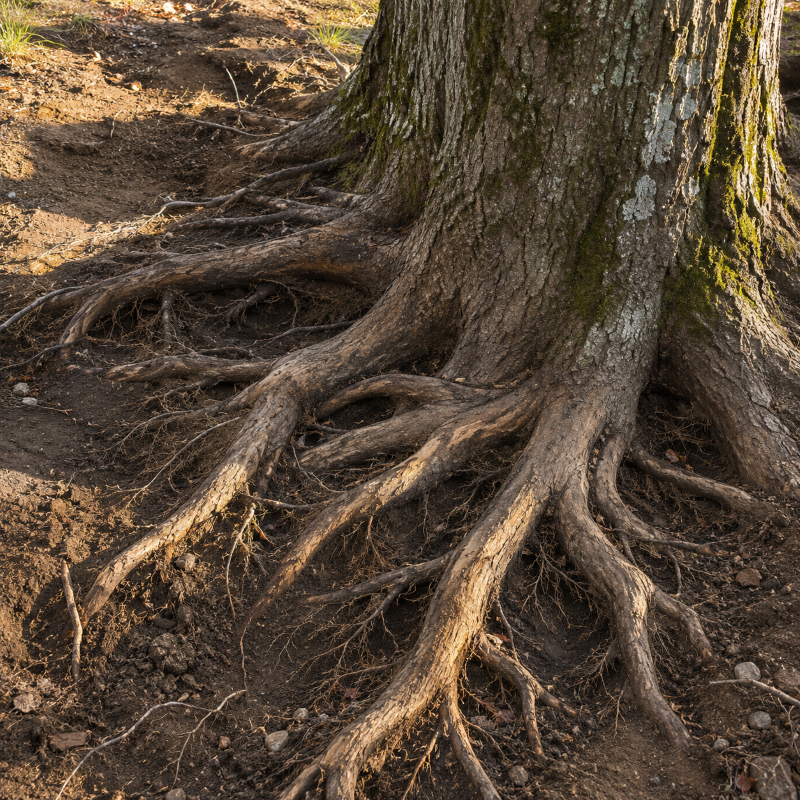
Air Excavation and Root Collar Excavation are specialty services that most people in Box Elder have never heard of, and that’s exactly why they deserve attention. Air excavation uses compressed air to move soil away from roots without damaging them, something a shovel or backhoe simply can’t do safely. Root collar excavation addresses a specific condition called girdling roots or root collar disease, where soil or mulch has built up around the base of a tree and the natural root flare gets buried. This is surprisingly common in newer plantings. It slowly strangles the tree from the ground up. You probably won’t see the problem from the surface, but an ISA Certified Arborist from Canyon Falls knows exactly what to look for.
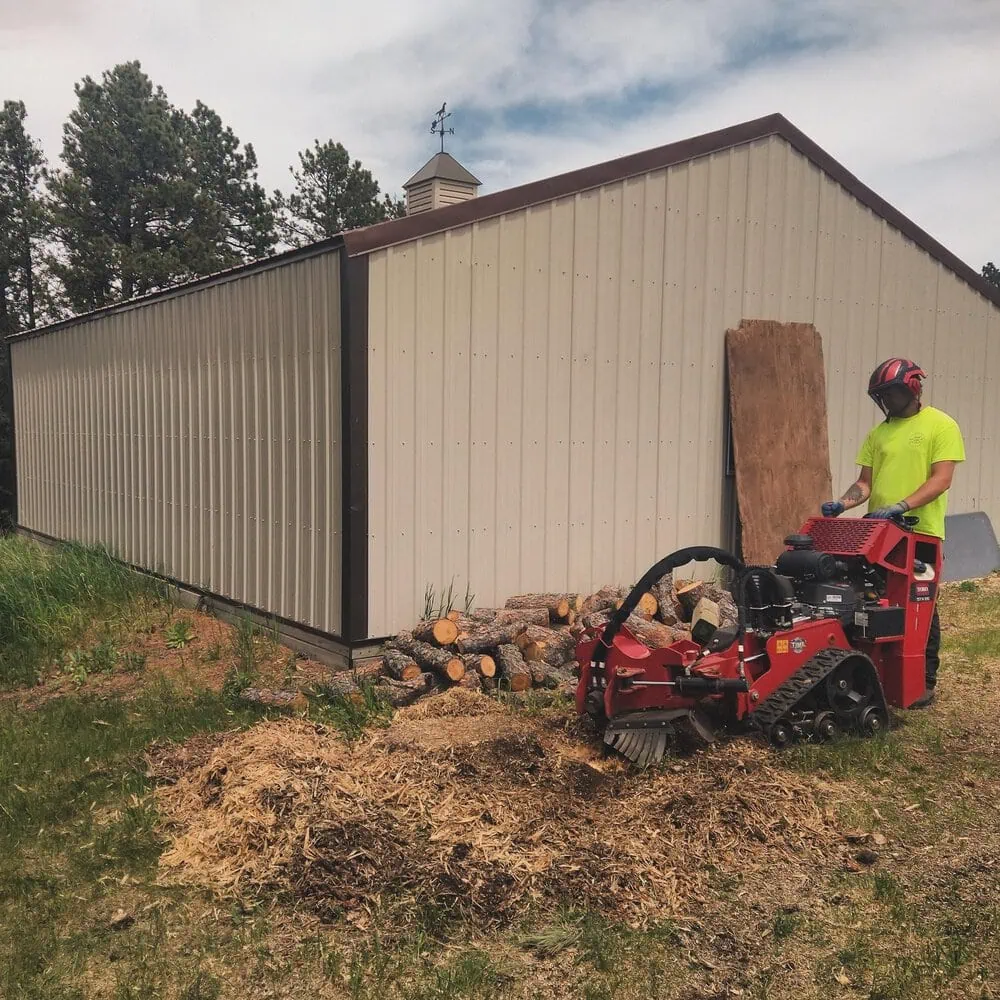
Stump Grinding & Removal
Stump grinding and removal handles what’s left after a tree comes down. Stumps aren’t just an eyesore. They can harbor fungal disease, attract insects, and get in the way of new planting. Canyon Falls grinds stumps cleanly and thoroughly so the area is ready for whatever comes next.
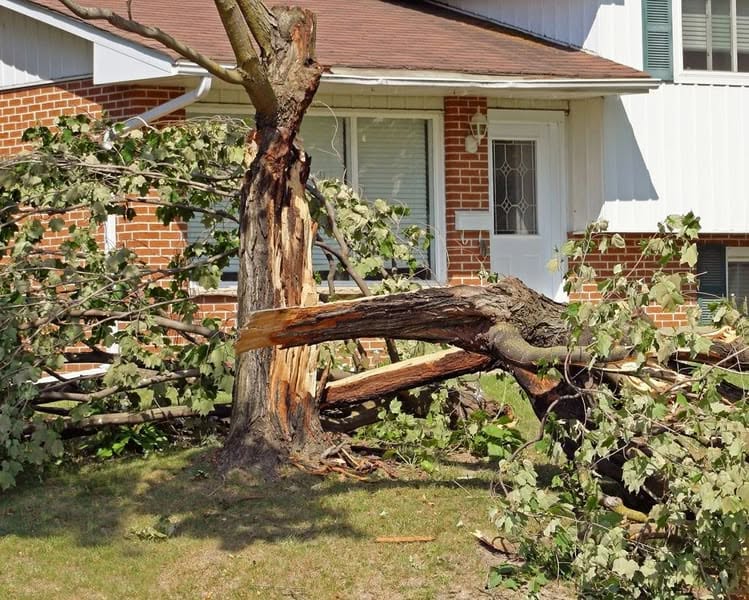
Emergency Tree Service
Emergency storm response is available 24 hours a day, 7 days a week. Box Elder’s position near open plains to the east means weather can escalate in a hurry. A storm that rolls in off the prairie at 10 p.m. doesn’t wait for business hours. When a large limb comes down on a vehicle, a fence, or a roof, you need someone who can respond fast and work safely under pressure.

Milling Services
Milling services round out the list. When a tree has to come down, the wood doesn’t always have to go straight to a chipper. Milling turns removed timber into usable lumber. It’s a genuinely different approach to what most tree companies offer, and it’s one more way Canyon Falls tries to do things right.
Every service starts with a free estimate and transparent upfront pricing. You’ll know the full cost, including all taxes and fees, before any work gets approved. No surprises after the fact. No fine print buried in the invoice. Pete Adams built this company on the belief that homeowners deserve straight answers from the people they hire.
Why Box Elder Homeowners Trust Canyon Falls Tree Works
Trust builds slowly in most industries. Sometimes it builds fast when the work is genuinely good.
Canyon Falls Tree Works was founded in 2023, which makes it a young company by most measures. But 133 five-star Google reviews in that short a time says something real about how the work is being done and how customers are being treated. That’s not a number you accumulate by being average or by cutting corners.
The ISA Certified Arborist credential is worth understanding before you hire anyone. The International Society of Arboriculture is the leading professional organization in tree care. Earning ISA certification requires passing a demanding exam, demonstrating real practical knowledge of tree biology, pruning standards, risk assessment, and plant health care, then maintaining that certification through ongoing continuing education. When Canyon Falls says ISA Certified Arborists are on staff, that’s a specific and verifiable standard. It’s not just a phrase on a website.
The ATCP membership and ISA Dakotas Chapter affiliation both reflect a company that stays connected to the broader tree care profession, current research, and evolving industry standards. That kind of connection matters when best practices in tree care keep developing.
The family-owned structure matters too. Pete Adams is the person behind this company. When you hire Canyon Falls, you’re working with a team that has a direct personal stake in the reputation they’re building in communities like Box Elder. It’s not a franchise. It’s not a regional call center dispatching whoever’s available that afternoon. It’s a local operation with real people who care about getting the work right every time.
Frequently Asked Questions About Tree Service in Box Elder, SD
How do I know if my ponderosa pine is at risk from bark beetles?
Bark beetles are one of the most serious threats to ponderosa pines in the Box Elder area and throughout the Black Hills. Early signs include small pitch tubes on the bark, which look like hardened globs of resin mixed with sawdust or a reddish boring dust collecting at the base of the tree. Yellowing needles that progress to red or brown are a later indicator, and by that stage the damage is usually severe. Drought stress is the main factor that makes pines vulnerable, so trees growing in dry summers or compacted soils face a higher risk than most. Canyon Falls Tree Works offers Plant Health Care assessments that include pest pressure evaluation for Box Elder homeowners, and catching the problem early gives you real options to work with. An ISA Certified Arborist on our team can walk through the specific warning signs with you during a free estimate visit at your property.
What causes the yellowing leaves on my ash or cottonwood tree?
Yellowing between the leaf veins, where the veins stay green but the rest of the leaf fades to yellow, is a classic symptom of iron chlorosis. It’s very common in Box Elder and the surrounding area because the soils here tend to run alkaline, which locks up iron in a form the tree simply can’t absorb. The tree isn’t declining from a lack of iron in the soil. It’s declining because it can’t access what’s already there. Canyon Falls Tree Works addresses iron chlorosis through Plant Health Care treatments, including soil amendments and trunk injections that deliver iron directly into the tree’s vascular system where it’s actually needed. Left untreated, chlorosis leads to progressive decline and eventually death. The good news is that most affected trees respond well to treatment when it starts before the decline gets too far along. Box Elder homeowners dealing with yellowing ash or cottonwood should get a professional assessment before writing the tree off as a lost cause.
Do I need a permit to remove a tree in Box Elder?
Tree removal permitting in Box Elder depends on a few factors, including the tree’s location, its size, and how close it sits to utility easements or right-of-ways. The City of Box Elder and Pennington County each have their own regulations, and requirements can also vary depending on neighborhood or HOA rules. Canyon Falls Tree Works is familiar with the local requirements in Box Elder and can help you figure out what’s needed before any work begins. We recommend checking directly with the city for current rules, and our team can walk you through the process as part of the free estimate conversation. Skipping permits when they’re actually required can create real problems down the road, so it’s worth getting this right from the start. Canyon Falls operates with full licensing and insurance in South Dakota, and we make sure every job is handled properly from the first phone call to the final cleanup.
What should I do after a storm damages a tree on my Box Elder property?
Safety comes first after storm damage. Every time. Don’t approach a tree with hanging limbs or one that’s leaning against a structure until a professional has assessed the situation. Hanging limbs under tension can drop without warning and cause serious injury. Canyon Falls Tree Works offers 24/7 emergency storm response for exactly these situations, because July thunderstorms in Box Elder don’t care about convenient timing. Once the scene is safe, our ISA Certified Arborists assess whether the tree can be saved or needs to come down, and we document the damage thoroughly, which can be useful when dealing with insurance claims. Even trees that look manageable after a storm may have internal cracks or a compromised root system that isn’t visible from the outside. Getting a professional evaluation from Canyon Falls Tree Works before attempting any cleanup on your own is always the right call.
What is root collar excavation and does my tree need it?
Root collar excavation is the process of removing excess soil, mulch, or debris from around the base of a tree to expose the root flare. That’s the natural flared area where the trunk meets the root system. When that area stays buried under soil or mulch, it creates conditions that promote decay, fungal disease, and girdling roots, which are roots that wrap around the trunk and slowly cut off the tree’s ability to move water and nutrients. It’s a surprisingly common problem in Box Elder, especially in newer plantings where soil was graded during construction and trees ended up planted too deep. You might not notice anything unusual from the surface, but an ISA Certified Arborist from Canyon Falls Tree Works can spot the signs during a standard evaluation. Trees with buried root collars often show gradual decline, poor growth, or bark problems right at the base. Air excavation is the safest way to remove that soil without damaging the roots underneath, and Canyon Falls is one of the few companies in the Black Hills region that’s both equipped and trained to do it correctly.
How much does tree service cost in Box Elder, SD?
Tree service pricing depends on quite a few variables. The size of the tree, the complexity of the work involved, site access, and exactly what services are actually needed all play a role. A small pruning job on a young ornamental tree costs significantly less than a crane-assisted removal of a large cottonwood sitting close to a structure. Canyon Falls Tree Works offers free estimates for all services in Box Elder, and our pricing is completely transparent. You’ll see the full cost, including taxes and fees, before any work gets approved. Nothing gets added on after the job is done. Pete Adams built Canyon Falls on the principle that homeowners deserve to know exactly what they’re paying for before they commit to anything. Because a price surprise at the end of a job isn’t just frustrating. It’s a sign that the company you hired doesn’t respect your time or your budget.
Ready to Get Started
Call for a Free Tree Service Estimate
If you need tree removal, pruning, plant health care, or high-risk tree work in Rapid City or surrounding South Dakota communities, Canyon Falls Tree Works is ready to help.
Call (605) 898-8733 to request your free estimate and get clear, professional recommendations for your property.